Posted by - News Staff \
\
April 20, 2025
\
Filed in - Business
\
Jerome Powell
Federal Reserve
\
3K views \
0 reviews
Who’s Really in Charge of the Money? Understanding the Federal Reserve Made Simple
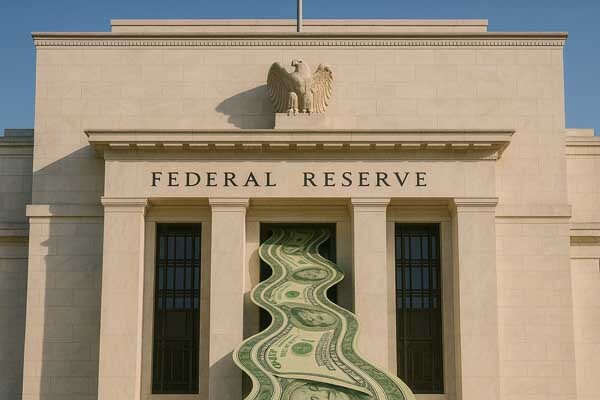
If you’ve ever wondered who pulls the financial strings behind America’s economy, look no further than the Federal Reserve. Often called "the Fed," it’s like the brain of the country’s banking system, keeping everything running smoothly so that inflation doesn’t spiral out of control and the economy doesn’t crash into chaos.

Click image for more information!
So, what exactly does the Fed do? It controls interest rates (the cost of borrowing money), influences how much money floats around, and helps keep prices stable. The Fed might raise interest rates to slow spending when inflation gets too high. If the economy struggles, it can lower rates to encourage borrowing and growth.
At the top of the Fed is its chair, who acts like the captain of a vast, very cautious ship. Right now, that captain is Jerome Powell, a figure often in the headlines when the economy gets jittery. He leads the Board of Governors—a group based in Washington, D.C., of seven people appointed by the President and confirmed by the Senate. Together, they call the shots on monetary policy.
But the Fed isn’t one building—it’s a system of 12 regional banks across the U.S., from San Francisco to New York. These banks help implement decisions made in Washington and monitor local economies.
What surprises most people is that the Federal Reserve isn’t precisely “under” the President or Congress. It’s independent. That means it makes decisions without needing approval from political leaders, even though the President nominates its top officials. Why? To avoid letting short-term politics mess with long-term economic stability.
In short, the Fed works quietly in the background—tweaking interest rates, supervising banks, and managing money supply—all to keep your savings safe, your loans affordable, and the economy in balance.




Comments