Trump Stakes Claim to Hormuz
WASHINGTON — President Donald Trump has raised tensions surrounding the world’s most important energy passage by suggesting that the Strait of Hormuz could soon become American territory.
“After we finish defeating Iran … pretty soon I’ll be declaring the Hormuz Strait a territory of the United States,” Trump said Friday during an appearance in Garden City, New York. It remains unclear whether the statement represented a genuine policy proposal or forceful rhetoric intended to pressure Tehran.
Trump had already claimed that the United States exercises “total control” over the strait through its naval blockade, describing the American military presence as a “wall of steel.” Iran disputes that assertion and maintains that it controls access to the passage.
Both claims describe military power—not legal ownership.
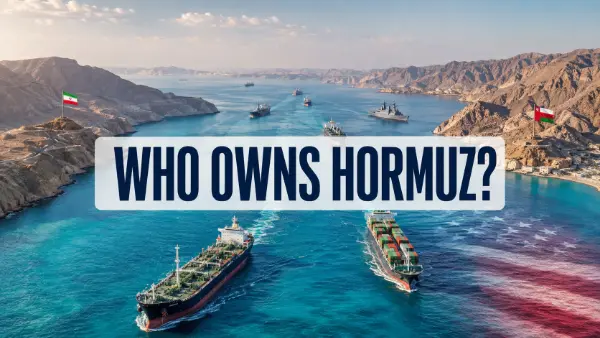
The narrow waterway lies between Iran and Oman, connecting the Persian Gulf with the Gulf of Oman and the Arabian Sea. Iranian and Omani territorial waters meet inside the strait. International maritime law nevertheless provides foreign ships with a right of passage through straits used for international navigation.
A declaration from Washington would not alter those boundaries. The United States could patrol the area, escort commercial vessels, or impose a blockade, but operational control would not automatically create American sovereignty.
For the Strait to become recognized U.S. territory, Washington would theoretically need a treaty or territorial agreement involving Iran and Oman—an almost unimaginable outcome under present conditions. An attempt to seize and annex the waterway militarily would face overwhelming international opposition and conflict with the United Nations Charter’s prohibition against acquiring territory through force.
A more realistic option would be an internationally negotiated security arrangement involving the United States, Oman, Gulf governments and major trading nations. Such an agreement could establish protected shipping lanes or multinational patrols without changing ownership.
Shipping through Hormuz has not stopped entirely, as initially claimed, but it has fallen dramatically. Petroleum traffic averaged approximately 4.9 million barrels per day during the second quarter of 2026, down from roughly 21.6 million barrels before the current conflict.
Iran has already rejected Trump’s position. Iranian officials insist that the strait cannot be seized through speeches, social media posts or aircraft carriers. Oman had not issued an immediate public response, but any sovereignty claim would directly affect its territorial waters and its long-standing role as a regional mediator.
American allies would probably support keeping Hormuz open while refusing to recognize unilateral U.S. ownership. China, India, Japan and South Korea—major customers for Gulf energy—would be especially concerned about further disruptions. Russia and China could also challenge any attempted annexation through the United Nations Security Council.
The most immediate worldwide reaction would likely be economic. Any sign that the statement was becoming formal policy could push oil prices, tanker insurance and shipping costs higher. Gulf governments would fear Iranian retaliation, while European and Asian leaders would likely urge Washington to pursue an international navigation agreement rather than a territorial confrontation.
For now, the Strait of Hormuz has not become American territory. Trump’s words may be negotiating pressure, a warning to Iran or the beginning of a more serious proposal. Turning that declaration into reality would require far more than naval power—and could provoke a global diplomatic and economic crisis.
 News Staff
 -
-
Business
Strait of Hormuz
territory of the United States
-
103 views -
0 Comments -
0 Likes -
0 Reviews
-
-
Business
Strait of Hormuz
territory of the United States
-
103 views -
0 Comments -
0 Likes -
0 Reviews