A Name Takes Center Stage
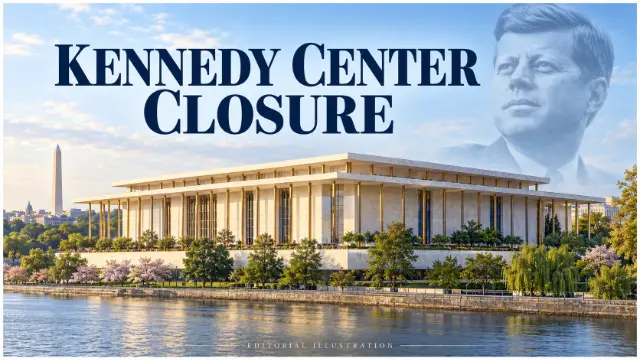
At Washington’s Kennedy Center, the dispute over the lettering outside has overtaken the performances inside.
The institution’s board voted Tuesday, September 15, to close most of the performing arts complex, hours after a federal judge again blocked efforts to place President Donald Trump’s name on the building. Trump announced an immediate closure, citing safety concerns, while making renovations conditional on winning the naming dispute in court.
Officials have raised financial and building-safety concerns, but the argument now extends beyond repairing an aging cultural landmark: it concerns whether recognizing the president is essential to securing its future.
Management’s case deserves consideration. Officials cited a partial ceiling collapse in the Grand Foyer earlier this month. Board documents also warned that the institution could struggle to meet payroll and maintenance obligations within weeks. Its leadership argued that Trump’s fundraising assistance was necessary to prevent financial failure—and that visible recognition would support that effort.
Those are the institution’s stated assessments; however, rather than independent findings that the building must close indefinitely or eventually be demolished.
The court’s position concerns authority. U.S. District Judge Christopher Cooper ruled that the board “cannot install memorials for President Trump or anyone or anything else at the Kennedy Center without Congress’s blessing.”
His September ruling followed a May decision against the earlier addition of Trump’s name. Subsequent proposals included wording crediting Trump with restoring the building and naming its grounds after him. Cooper rejected those alternatives, too.
Congress has allocated $257 million for repairs. Trump nevertheless said renovation work would not proceed if the naming decision remained unfavorable after appeals. The Justice Department appealed the latest ruling.
That connection between recognition and renovation lies at the heart of the controversy. Representative Joyce Beatty, a board member challenging the naming changes, accuses Trump of making the institution’s survival dependent on honoring him. The board argues that his involvement offers a financial lifeline.
The dispute raises a question that reaches beyond any president or political party: When does recognition for public service become a condition of providing it? Names can help attract donations and acknowledge contributions. But a public institution also has obligations to the people who use it, work there and help pay for it.
For audiences, artists and employees, the immediate distinction is significant: most of the venue faces closure, while the adjacent REACH was expected to remain open. Its future now involves both construction plans and continuing litigation—a complicated program for anyone simply hoping to attend a show.
At a center devoted to the performing arts, the billing has become the main event.
 News Staff
 -
-
Arts & Culture
Washington’s Kennedy Center
closure
-
77 views -
0 Comments -
0 Likes -
0 Reviews
-
-
Arts & Culture
Washington’s Kennedy Center
closure
-
77 views -
0 Comments -
0 Likes -
0 Reviews





 Loading ...


