JTFactsMax
Deadline Diplomacy at Hormuz
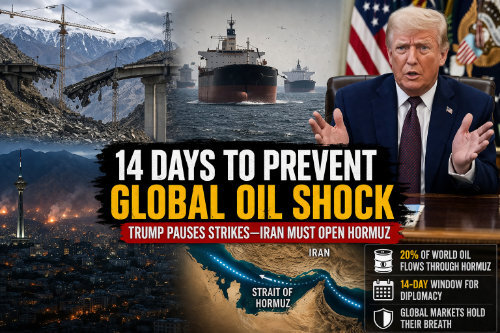
The world edged back from the brink as President Donald Trump abruptly paused a threatened U.S. military strike on Iran, tying the decision to a critical demand: reopen the Strait of Hormuz and keep global oil flowing.
In a dramatic late-stage reversal, Trump announced he would suspend planned attacks for 14 days, offering what he described as a narrow diplomatic window. The condition was clear and immediate—Iran must guarantee safe passage for oil tankers through the Strait of Hormuz, one of the most vital corridors on Earth. Roughly a fifth of the world’s oil supply moves through this narrow passage, making any disruption a global economic flashpoint.
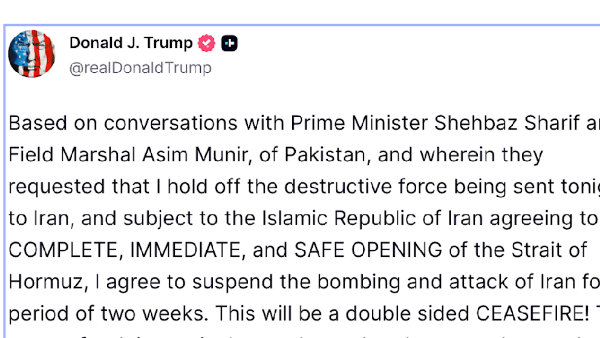
The decision came after days of escalating rhetoric and military positioning that had raised fears of imminent conflict. Trump had previously warned of severe consequences if Iran failed to comply, language that rattled markets and governments alike. Yet, in a pivot that surprised both allies and adversaries, he confirmed via social media that negotiations had shown “meaningful progress,” prompting the temporary stand-down.
According to U.S. officials, Iran has submitted a multi-point proposal now under review, reportedly brokered with assistance from regional intermediaries, including Pakistan. While details remain limited, the framework is being described as a potential starting point for broader de-escalation talks.
Iranian officials, meanwhile, framed the moment differently, portraying the pause as a strategic victory and a sign of resistance against external pressure. State-aligned outlets emphasized resilience rather than concession, underscoring the fragile and highly contested narrative on both sides.
Global markets reacted swiftly. Oil prices, which had surged amid fears of supply disruption, showed early signs of stabilization following the announcement. Analysts caution, however, that the next two weeks will be decisive. Any misstep—military, political, or logistical—could quickly reverse that calm.
For now, the focus is fixed on a single chokepoint and a ticking clock. If Iran fully reopens the Strait and maintains secure passage, the pause could evolve into a longer-term agreement. If not, the threat of renewed escalation remains very real.
In a region where timing is everything, the next 14 days may determine whether this was a fleeting pause—or the beginning of a broader reset.
 Max Liebermann
 -
-
JustTheFactsMax
Hormuz
US Iran Israel conflict
CEASEFIRE! 2-weeks
-
2K views -
0 Comments -
0 Likes -
0 Reviews
-
-
JustTheFactsMax
Hormuz
US Iran Israel conflict
CEASEFIRE! 2-weeks
-
2K views -
0 Comments -
0 Likes -
0 Reviews




 Loading ...


