DLNews Wars of the World:
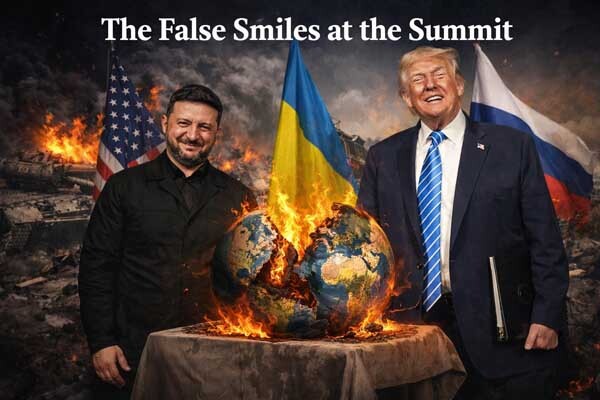
The False Smiles at the Summit
Mar-a-Lago produced the familiar choreography of diplomacy: handshakes, polite smiles, and talk of “progress.” From a distance, the optics suggested movement. Up close, and a day later, the substance told a far colder story. Whatever warmth existed between Volodymyr Zelenskyy and his American host did not translate into movement where it matters most. On the central questions of the war, Vladimir Putin remains unmoved.
Ukrainian officials say this plainly, even if the language of summits often does not. One government insider summed it up with weary precision: “We can hold countless meetings and have dozens of phone calls, but one thing remains unchanged: Putin wants the entire Donbas – and much more. He hasn’t clearly stated anywhere that he wants peace.” The remark carries no rhetorical flourish, just the accumulated frustration of a conflict now measured in years.
Zelenskyy echoed that assessment publicly. Asked whether he saw signs of peace, he answered bluntly: “Honestly, I don’t see any such signs. I don’t hear that publicly. He doesn’t talk about peace. He says he can continue. These are not signals for peace.” It is difficult to compress the problem more succinctly than that.
This gap between atmosphere and reality defines the moment. Optimism circulates in Washington and around private estates; Moscow, meanwhile, continues to signal endurance and maximalist aims. Military pressure persists, political demands remain expansive, and compromise is conspicuously absent. If this disconnect were merely awkward, it might be ironic. Because it is lethal, it is something closer to tragic farce.
Proposals that might have offered even a theoretical off-ramp have stalled. Kyiv has floated ideas such as a referendum tied to a demilitarized zone in the Donbas, contingent on a ceasefire. Those ideas have gone nowhere. They were rejected in Moscow and found no traction on the American side either, removing one of the few conceptual bridges between war and negotiation.
Ukrainian skepticism runs deeper than any single proposal. Since 2014, agreements have been signed and later violated. From Kyiv’s perspective, a demilitarized zone raises questions no one has convincingly answered. Who guarantees security? What happens if unmarked forces appear? Who responds, and how fast? These are not academic concerns; they are lived experiences.
Against that backdrop, Ukraine’s current strategy is defensive in a different sense: preventing its case from being flattened into a symmetry that does not exist. Diplomats are focused on ensuring that European voices remain engaged and that negotiations do not quietly drift toward accepting Russian demands as a baseline. One Ukrainian diplomat described a recurring pattern after calls with Putin, noting that American rhetoric often slides back toward Moscow’s position. “How are we supposed to agree to a peace that is effectively tantamount to surrender?” the diplomat asked.
That concern resurfaced after the summit. Once again, Donald Trump spoke publicly about his personal rapport with Putin, emphasizing trust and shared history. Public condemnation of Russian attacks was absent. Instead, violence by Russia and Ukraine was rhetorically paired, a framing Kyiv views as dangerous because it places aggressor and defender on the same moral plane.
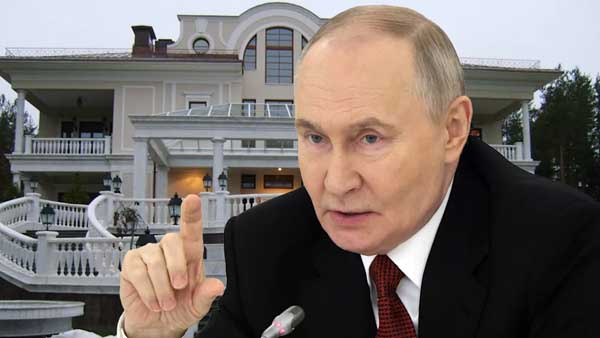
After alleged attacks on the residence of Vladimir Putin (73), Russia announced a hardening of its negotiating position—part of the mega-complex in Valdai: the former love nest of the Russian leader, Putin.
Then came Monday evening. Russia accused Ukraine of attempting to attack one of Putin’s residences and announced it was hardening its negotiating stance. According to Interfax, Foreign Minister Sergei Lavrov claimed that 91 long-range drones targeted the president’s state residence in the Novgorod region on December 28 and 29. The actions, he said, were “reckless” and would not go unanswered. Targets in Ukraine, he added, had already been selected.
Kyiv rejected the accusations outright, calling them fabrications designed to derail talks with the United States. Zelenskyy countered that Russia was preparing new strikes on government buildings in Kyiv and warned that security guarantees remain unresolved. The exchange had the feel of a grim ritual: accusation, denial, threat, escalation.
Security guarantees remain the largest unresolved promise. Despite talk of “one hundred percent agreement,” there are still no details—no clarity on troops, mandates, or response mechanisms. Europe is involved, but willingness to accept real military risk remains uncertain, particularly given Moscow’s warnings that Western forces would be considered legitimate targets.
What emerges is not a breakthrough but a competition for influence around a single decision-maker, played out against an unchanging battlefield reality. Deadlines have disappeared. Ultimatums have softened. Even the once-bold claim that the war could be ended quickly has given way to the acknowledgment that it may drag on.
In Kyiv, there is little illusion. Government and military leaders are aligned in their assessment that nothing in Russia’s posture suggests genuine compromise. As one Ukrainian officer put it, with a candor earned under fire, “The intensity of the Russian attacks on all fronts speaks volumes.” The smiles, in contrast, say very little at all.
 News Staff
 -
-
Arts & Culture
President Trump
Ukraine-Russia Peace dance
Volodymyr Zelenskyy
-
299 views -
0 Comments -
0 Likes -
0 Reviews
-
-
Arts & Culture
President Trump
Ukraine-Russia Peace dance
Volodymyr Zelenskyy
-
299 views -
0 Comments -
0 Likes -
0 Reviews