Santorini and Mykonos: Two Greek Icons Back in the Spotlight
by Anthony Grant
Two famous Greek islands walk into a bar, and one says to the other with a sultry sigh, “I’m tired of being called fun and gorgeous all the time,” while the other sniffs, “People only love me for my caldera!” That first island is called Mykonos—maybe you’ve heard of it—and the second one, Santorini.
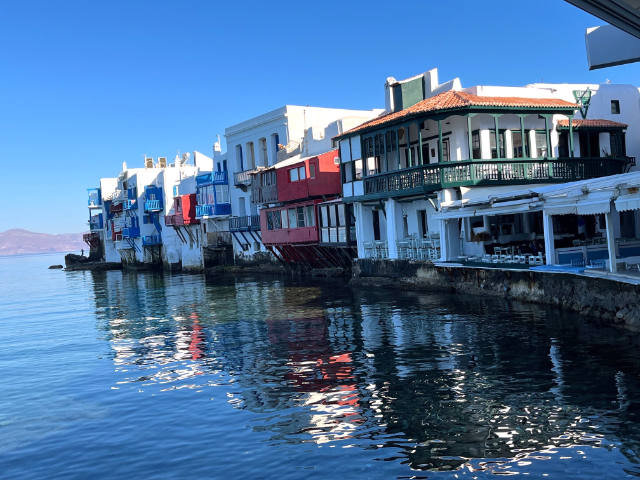
The "Little Venice" section of Mykonos. Photo: Anthony Grant
Now, imagine these two isles commiserating over a glass of chilled white wine. Not just any wine, mind you, but an Assyrtiko whose vines thrive in the dry sandy volcanic soil of Santorini. The island that happens to be one of the most photographed and instantly recognizable in the world but that is often seen through the lens of a single frame.
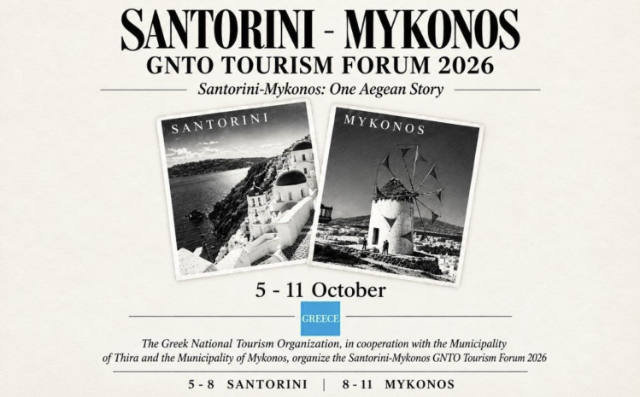
That last observation was made by the Secretary General of the Greek National Tourism Organization, Andreas Fiorentinos, at a remarkable Santorini-Mykonos GNTO Tourism Forum this month that focused less on postcard visions and more on culture, quality and extending the tourist season beyond the traditional summer months. Both islands are global brands in their own right: Mykonos as the original Mediterranean party island where hedonism and superyachts hold sway and Santorini, where a catastrophic volcanic eruption in 1620 BC caused the island to cave in, leaving behind a ring of high cliffs affording stunning views out over the waters of the caldera.
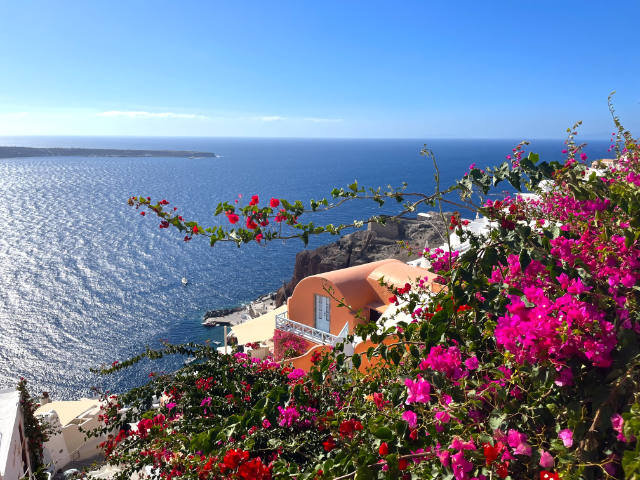
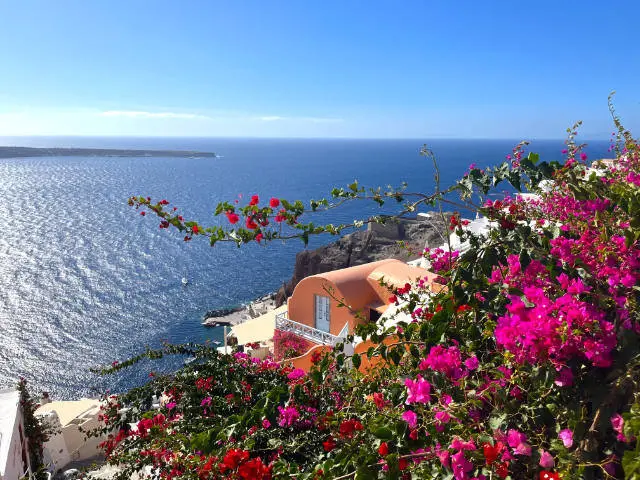
Oia, Santorini in October. Photo: Anthony Grant
But that beauty has led to what some term overtourism, as huge cruise ships flood the clifftop towns of Fira and Oia in Santorini with daytrippers while Mykonos suffers from an enduring myth that everything on the small island is either overcrowded or overpriced.
However, if you go against the mass tourism flow even a little bit, you’ll find wellsprings of authenticity in both iconic spots. The purpose of the forum was to remind the world that these places are emblematic not because of Instagram but because of the unique culture, cuisine and island geography that are theirs alone. It’s also true that you can experience more of those local flavors without the crowds outside the peak summer months. “May and June and September and October are when Mykonos is at its most authentic,” Mr. Fiorentinos said.
During three days this month, the sun shone high in Mykonos and the beauty of the Cycladic island was on full display. My chic boutique hotel, the Bill & Coo, is perched above Megali Ammos beach, which wasn’t crowded at all in early October. From there it was a short walk into Chora, the dreamy main town of Mykonos where it’s all about losing yourself in the gentle tangle of whitewashed lanes strewn with pink bougainvillea flowers and peppered with little bars and luxury boutiques.
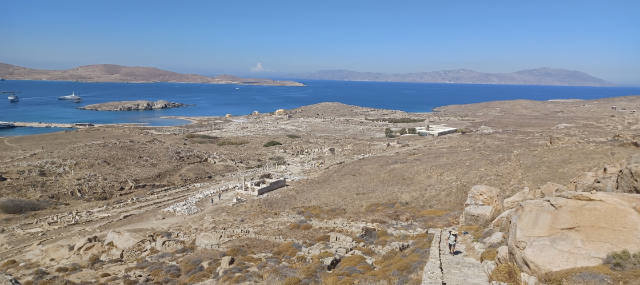
The sacred island of Delos, near Mykonos. Photo: Anthony Grant
It’s very tempting to linger over a locally-sourced Mykonian lunch or dinner at Vegera, next to the charming town hall, or at a buzzy seafood taverna like Kavos facing the Aegean—and not think about too much else. Islands are a little bit about escape, after all.
But part of the Mykonos magic has to do with the things slightly off the grid. Pop into the archaeological museum, close to the old port. It’s a reminder that the island is not only the swanky province of the celebrity set but also a repository of ancient history. It’s also inextricably linked to the sacred island of Delos, according to Greek mythology the birthplace of the deities Apollo and Artemis. From Apollonian sanctuary to one of the biggest entrepôts in the ancient world, the history of Delos is fascinating and a visit there is a must. The fact that one of the world’s most magnificent archaeological sites is just six miles southwest of Mykonos is both cool and practical: organized boat excursions will get you there in under half an hour.
Santorini too has ancient superstars. Akrotiri, in the southern part of the island, might even have been the inspiration for Atlantis. This is a large and remarkably well-preserved Bronze Age settlement that was completely buried, but also protected, by layers of volcanic ash following the famous volcanic eruption that reshaped Santorini. It’s still an active archaeological site but easy to explore thanks to its modern roof and walkways. The affable Mayor of Santorini, Nikos Zorzos, notes that 2028 will see the inauguration of a new archaeological museum, presenting a more authentic picture of the island’s rich history.
That history extends to the very soil of the place. Santorini’s culinary bounty belies its small size. I met Mr. Zorzos at a dinner at Aroma Avlis, the restaurant of the family-run Artemis Karamolegos Winery serving creative Mediterranean cuisine that draws on locally sourced ingredients like Santorini fava and tomatoes. The wines are exceptional and the tangy tomato fritters alone are worth booking a ticket to Greece right now — and it’s not too soon to start planning for your own spring Greek odyssey. Go to visitgreece.gr
 \
\ 



Comments