Fake Permit Bills Target Applicants
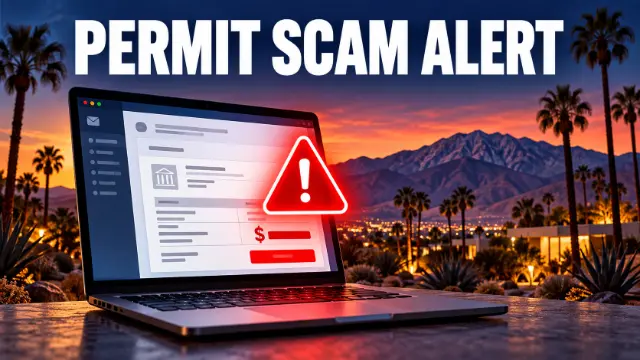
An email about a pending permit may contain the correct property address, application number and name of a real official—and still be a scam.
The Palm Springs Police Department is warning residents and businesses about criminals posing as city or county planning and zoning staff to collect fraudulent permit fees. The scheme targets people with active land-use applications. Scammers use publicly available permit information to make an unexpected invoice appear connected to a real project.
The emails can look like routine government correspondence, with professional formatting, official-looking imagery and details about an applicant’s case. Some include an itemized PDF invoice. Others warn that a delay in payment could hold up the permit. The sender may demand a wire transfer, an app payment or cryptocurrency.
Those accurate details are what make the scam dangerous. A correct address or case number means the sender found information about an application. It does not mean the city sent the bill.
Palm Springs says it never requests payment by wire transfer. The city accepts payments through its official online system or by check payable to “The City of Palm Springs.”
Before paying an unexpected fee, applicants should independently contact the government office handling their permit. Find its phone number on the official city or county website rather than using a number or link in the email. Check the sender’s complete email address for a non-government domain, extra characters or a slight misspelling. A government seal, polished writing or the name of an actual employee is not enough to verify a payment request.
Anyone who receives a suspicious request involving a Palm Springs permit should report it to the Palm Springs Police Department. People who have paid a fraudulent invoice should also contact their bank or payment provider promptly and file a complaint with the FBI’s Internet Crime Complaint Center at www.ic3.gov. Keep the email and invoice, along with any payment instructions and transaction details, for investigators.
The police warning concerns a nationwide scheme. It does not specify whether anyone in Palm Springs has lost money to it.
 News Staff
 -
-
Business
Palm Springs Police Department
Fake Permit Bills Scam
-
74 views -
0 Comments -
0 Likes -
0 Reviews
-
-
Business
Palm Springs Police Department
Fake Permit Bills Scam
-
74 views -
0 Comments -
0 Likes -
0 Reviews



 Loading ...


