Netanyahu Rejects Gaza Deal
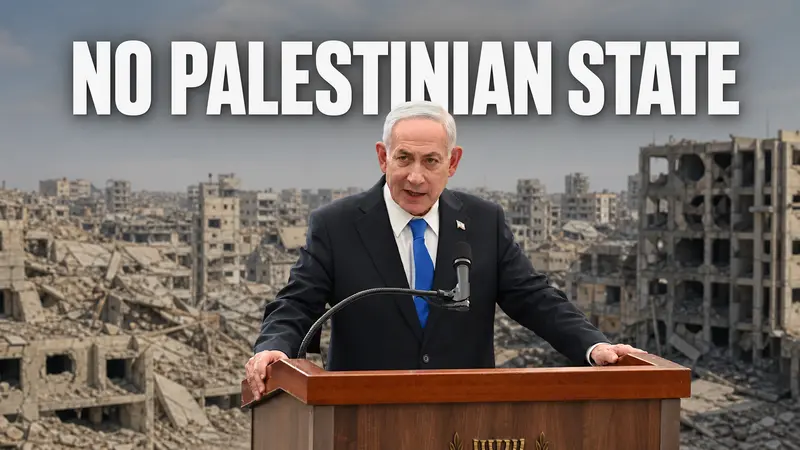
JERUSALEM, August 9, 2026 — Israeli Prime Minister Benjamin Netanyahu has rejected the latest U.S.-backed plan for Gaza, exposing a rare disagreement with President Donald Trump and further narrowing the prospects for a Palestinian state.
“As long as I am prime minister, no Palestinian state will be established — not in Gaza and not in the West Bank,” Netanyahu said at a Cabinet meeting. He also declared that Israel would not withdraw its forces from their current positions until Hamas had been “genuinely disarmed.”
Netanyahu confirmed that Israel had received a draft of the 15-point plan but had not approved it. Israel subsequently submitted objections before formally rejecting the document. Discussions with Washington are continuing, but the disagreement affects the central elements of the proposal.
Trump announced the plan on July 30 as a “historic” agreement for the complete disarmament of Hamas and other armed groups in Gaza. It was developed through the U.S.-led Board of Peace, which oversees efforts to implement the ceasefire and establish a postwar administration in the territory.
The plan does not call for an immediate exchange of Hamas’s weapons for a full Israeli withdrawal. Instead, it outlines a phased process in which Hamas and other factions would transfer their weapons and governing authority to a Palestinian technocratic administration. An international committee would verify compliance, while Israeli forces would withdraw in stages. The roadmap also calls for a political process leading toward Palestinian self-determination and statehood.
That final provision directly conflicts with Netanyahu’s position.
Hamas has indicated that it is prepared to begin surrendering weapons, but it has attached conditions. The organization says that giving up its heavy weapons must be accompanied by an end to Israeli attacks, a guaranteed Israeli withdrawal and meaningful progress toward Palestinian statehood.
Israel insists that complete disarmament must come first. The result is a “you first” deadlock in which neither side trusts the other to honor its commitments.
The dispute also threatens the fragile ceasefire. Israeli forces currently control more than 60 percent of Gaza, while deadly attacks have continued. Local health officials reported that 17 people were killed in Israeli strikes overnight on August 1 and 2. Israel said its operations targeted Hamas members who posed a threat to its forces.
The wider war began after the Hamas-led attack on southern Israel on October 7, 2023, which killed approximately 1,200 people and resulted in 251 hostages being taken. The exact Israeli death toll has been revised several times, making the rounded figure more reliable than the frequently cited total of 1,195.
Netanyahu’s rejection could also complicate Washington’s attempt to contain its conflict with Iran. The United States and Iran remain locked in a tense confrontation over Tehran’s nuclear activities, sanctions and control of shipping through the Strait of Hormuz. Negotiations over reopening the waterway have made limited progress, with Trump describing the two sides as only “semi-negotiating.”
Iran has connected the Hormuz dispute to conflicts involving its regional allies. Tehran is demanding an end to military operations against Iran and aligned groups in Gaza, Lebanon, Yemen and Iraq as part of a broader settlement. Continued fighting in Gaza could therefore give Iran and its partners another justification for maintaining pressure on American and Israeli interests.
The public disagreement between Washington and Jerusalem may also weaken the appearance of a united strategy. The United States needs cooperation from Gulf governments and regional mediators to protect shipping, reduce attacks by Iran-aligned groups and prevent another round of direct fighting. A stalled Gaza agreement makes that diplomatic effort more difficult.
The effect on the U.S.–Iran conflict is likely to be indirect rather than decisive. Iran’s nuclear program, sanctions and the Strait of Hormuz remain the main issues. Nevertheless, Gaza has become part of the wider regional confrontation, and renewed violence could encourage attacks by the Houthis or pro-Iranian militias in Iraq.
Trump now faces three difficult options: pressure Netanyahu to accept reciprocal and internationally verified steps, revise the plan around Israel’s objections, or concentrate on Iran and allow the Gaza initiative to stall.
Pressuring Netanyahu could deepen the divide with Israel. Diluting or abandoning the plan, however, would increase the danger of renewed war in Gaza—and make an already unstable regional conflict even harder to contain.
 News Staff
 -
-
Arts & Culture
Benjamin Netanyahu has rejected the latest U.S.-backed plan for Gaza
-
444 views -
0 Comments -
0 Likes -
0 Reviews
-
-
Arts & Culture
Benjamin Netanyahu has rejected the latest U.S.-backed plan for Gaza
-
444 views -
0 Comments -
0 Likes -
0 Reviews





 Loading ...


